<<::==(( o ))==::>> YOU ARE VISITOR NUMBER 000000 !!! BEST VIEWED IN NETSCAPE NAVIGATOR 3.0 AT 800×600 ♥ MODEM FRIENDLY ♥ LAST UPDATED 07.28.96 <<::==(( o ))==::>> YOU ARE VISITOR NUMBER 000000 !!! BEST VIEWED IN NETSCAPE NAVIGATOR 3.0 AT 800×600 ♥ MODEM FRIENDLY ♥ LAST UPDATED 07.28.96
☆ About Me ☆
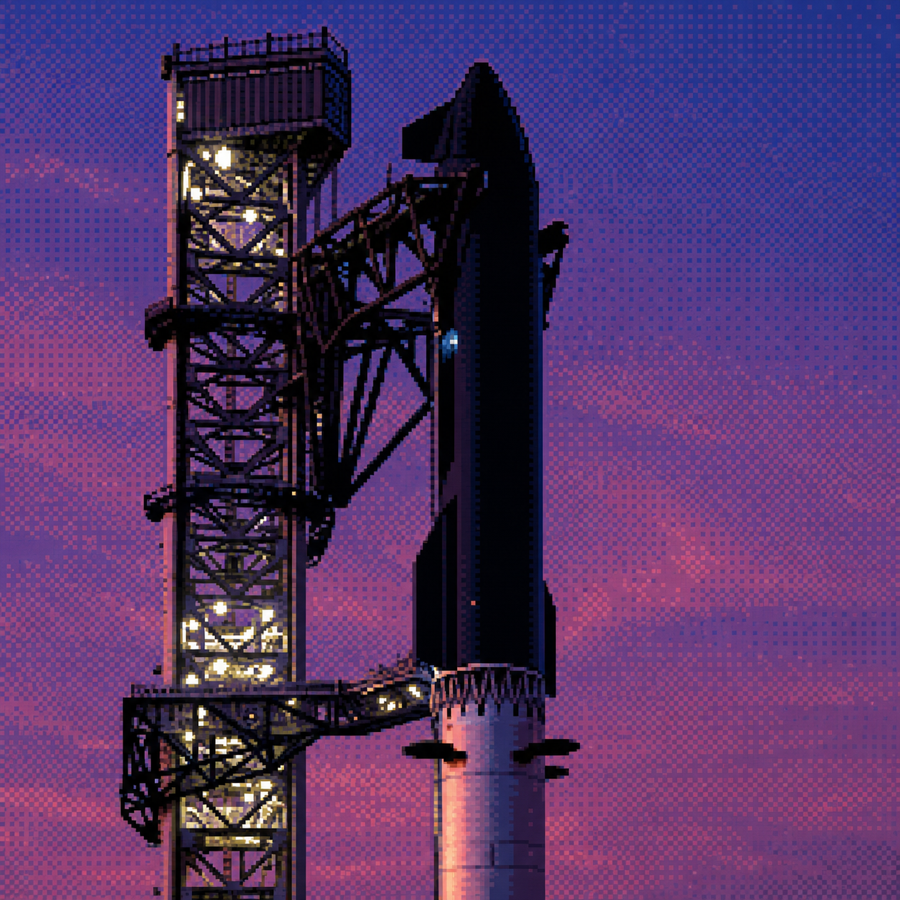
ROCKET-LAB.PNG · 256 COLORS
COOPER E.
INDEPENDENT AI RESEARCHER & NEURAL SYSTEMS SCIENTIST
I TRAIN LARGE NEURAL NETWORKS AND CHASE THE MYSTERIES HIDDEN INSIDE THEM.
I'm Cooper E., known online as jcooperkai. I train neural networks and study what happens inside them — the structure that emerges in the weights, the reasoning that appears without ever being taught, and the strange failures that reveal how these systems actually think.
Modern models are the most capable artifacts we have built and the least understood. I am drawn to that gap. My work runs from architectures written from first principles to experiments that pry open a trained network and ask it what it knows — pursuing the quiet, difficult questions rather than the easy demonstrations.
This lab is the record of that pursuit: independent papers, original experiments, working prototypes, and every result worth keeping — including the ones that proved me wrong.
RESEARCH INTERESTS:INTERPRETABILITYCOMPUTABILITYFROM-SCRATCH LEARNINGHONEST EVALUATION
✦ Research Papers ✦
Welcome to my cyber-library. Abstracts live on this page; plain text papers and citation files are downloadable for maximum 14.4k modem compatibility.
FILE0012026
WHAT BROKE: A DEFECT CENSUS OF AN AI-AUTHORED PRODUCTION SYSTEM
INDEPENDENT RESEARCH NOTE
COOPER E.
VIEW ABSTRACT
Defect studies draw on codebases written by many people over years, where the record of what went wrong is scattered and largely lost. This note reports a census of a different corpus: 28,207 lines across thirteen packages, written by a single AI agent over roughly two days, in which every defect found was documented in the commit that fixed it. 119 commits, 48 describing something that was wrong. The dominant class was not logic error but two halves of the system, each internally consistent, that disagreed with each other. The second finding is negative and sharper: of the defects a test caught, none were caught by a test written for something else. Every one required a test that asked that specific question.
SPLIT-BRAIN INVARIANTS: WHEN BOTH HALVES ARE CORRECT
INDEPENDENT RESEARCH NOTE
COOPER E.
VIEW ABSTRACT
In a census of 48 defects from a 28,207-line AI-authored system, the largest single class had a property that makes it invisible to ordinary review: every half was correct on its own. A gate demanded a file at one path while the component supplying it used another. A rollback looked for a tag in a format nothing produced. Each side passes its own tests and reads correctly to a reviewer; the defect lives in the space between them, which no file owns. This note characterises the class, gives the ten instances, and reports what actually caught them -- not more tests, but tests written specifically to ask whether two halves still agree.
A 32-bit x86 operating system written from scratch in C and assembly. Boots on its own kernel in QEMU to an interactive shell: paging, preemptive task switching, PCI, an RTL8139 driver, a RAM filesystem, and 27 bundled applications.
An autonomous-driving perception stack over ordinary dashcam footage. Drivable-surface and lane segmentation, tracked vehicles with metric distances, and a predicted driving line clamped to the segmented road.
Two local-first systems: a conversational runtime wrapping a local model in memory, retrieval and verification alongside a from-scratch predictor, and a generative art system that teaches a NumPy pixel-art model continuously. Both run their model through Ollama — you must have Ollama installed; nothing is sent off the machine and there is no hosted fallback.
Please copy freely for scholarship, remix responsibly, and cite the final versions. Each file below is a real, downloadable companion to the work on this page.
Three small things I wanted to know the answer to. Each was run before it was written up, and each reports the numbers it actually produced — including the one that came out messier than the story around it. The scripts are here; they need only NumPy.
E1
HOW OFTEN DOES XOR ACTUALLY CONVERGE?
XOR is the textbook problem a hidden layer solves. That is a claim about what is possible, not about what happens. So: over 200 random initialisations of a 2-2-1 network trained from scratch, how many actually get there?
Initialisations tried200
Converged153 (76.5%)
Still stuck at 20,000 steps47
Steps to converge, median1,264
Steps to converge, range737 - 5,329
WHAT IT MEANS: Almost a quarter never made it. The architecture can represent XOR; gradient descent from a random start reaches it about three times in four. A single lucky run would have reported “solved” and told you nothing about that.
Paper 002 reports walk-forward AUC 0.5105 and calls it no skill. That is only honest if pure noise produces numbers that large at the same sample size, so this measures the null distribution directly instead of asserting it: coin-flip labels, independent noise scores, 20,000 trials at n = 11,497.
Null AUC mean0.50002
Null AUC standard deviation0.00534
Null 95% range0.4896 - 0.5105
Largest AUC noise alone gave0.5207
Observed 0.5105 sits at1.97 sd from chance
Two-sided p0.0492
WHAT IT MEANS: This did not come out as cleanly as the paper's framing suggests, and the honest reading is the narrow one. 0.5105 lands exactly on the upper edge of the null 95% range, at p = 0.0492 - marginal, not comfortably inside noise. What rules it out as signal is not this p value but its company: a Brier improvement of 0.00004, a predicted range spanning 0.47 to 0.53, and overlapping windows that make the trials less independent than this null assumes. A borderline p on its own would not have settled it.
Busy Beaver values cannot be computed by any general algorithm, so each one is established by resolving every machine in its class one at a time. BB(2,2) is small enough to do exhaustively and watch it finish: 20,736 machines, each proven to halt or proven to cycle.
Machines enumerated20,736
Proven to halt9,784
Proven never to halt10,952
Undecided0
S(2,2) recovered6 steps (published: 6)
Σ(2,2) recovered4 marks (published: 4)
WHAT IT MEANS: Two bugs surfaced while writing this and both are worth naming. Not counting the halting transition as a step gave 5 instead of 6. Reading the mark count off whichever machine ran longest gave 1 instead of 4 - the step maximum and the mark maximum are separate maxima and need not be the same machine. Both produced plausible numbers, which is exactly why the published values are the check.
EVERY BACKTEST NEEDS A CONFIGURATION THAT CANNOT WIN
Two defects in my own market harness produced enormous fictitious profits. One clamped the modelled quote but not the fair value, inventing a spread out of nothing; the other compounded a bankroll with no position cap and returned 10^250. Neither looked like an error. Both were caught by one rule: the zero-edge control must return exactly zero, and it is the first number you read.
My backward decider treated an exhausted search window as a contradiction, so it confidently certified the BB(2,4) champion — a machine that halts after 3,932,964 steps — as non-halting. It announced nothing. Exhaustion and refutation are different answers, and a decider that conflates them returns a proof it does not have.
On a system built so the answer was known in advance, a channel decodable at 100 percent accuracy contributed 0.9998 bits to a correlational description of a layer and 0.0006 to an interventional one. The network never used it. Reporting probe accuracy as a mechanistic result is off by roughly 1600x there.
“Build small, inspect everything, and let strange ideas earn their complexity.” — jcooperkai
✦ Talk to Buddy ✦
ACTIVITY
JCOOPERKAI RESEARCH GUIDE
BUDDY.AI v0.96
A compact, privacy-friendly assistant for exploring Cooper's lab.
ONLINE
BUDDY>
Hi! I’m Buddy, Cooper’s local research guide. Ask me about the papers, projects, downloads, agentic AI, or how to reach Cooper. You can also attach a small file; it stays in this browser.
FILES STAY LOCAL TO THIS BROWSER
✉ Contact / Collaborate ✉
LET'S BUILD SOMETHING STRANGE & USEFUL.
I'm open to thoughtful AI research conversations, agentic-system projects, technical demos, and open-source collaboration. For the fastest reply, send electronic mail.